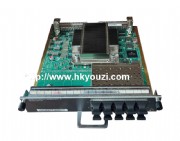
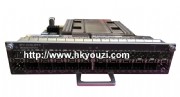
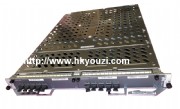
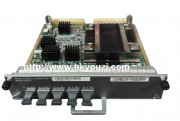
CATEGORY


Brand:HUAWEI
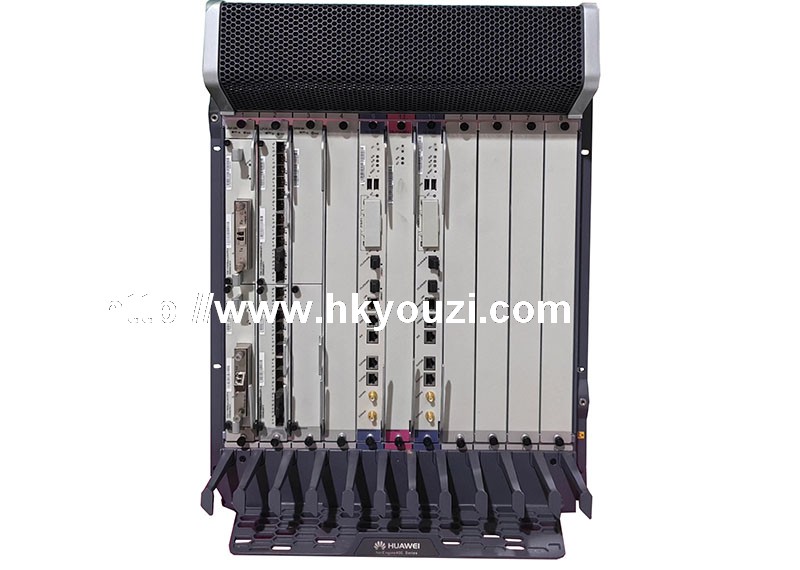
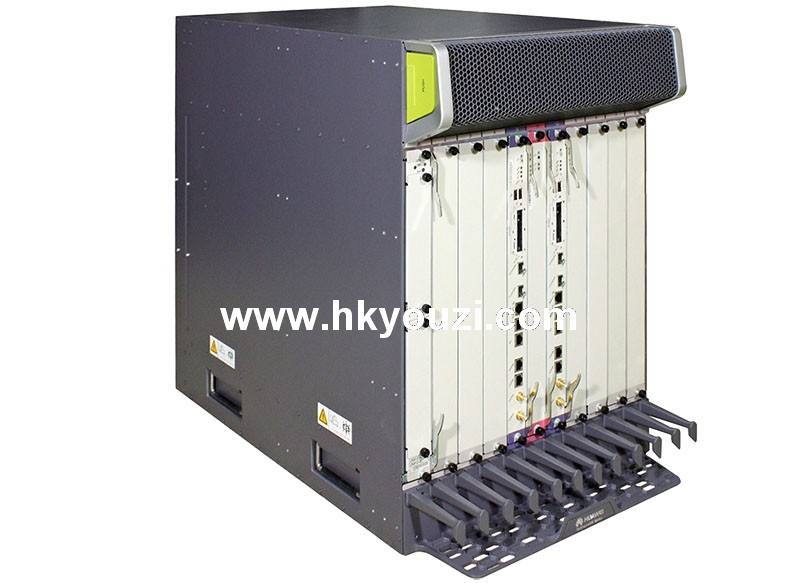
Module name:Router
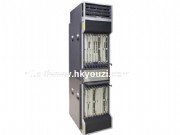
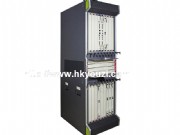
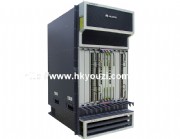
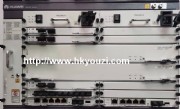
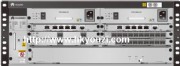
Model:NE40E-X8
The HUAWEI NetEngine40E satisfies the service requirements of IP/MPLS bearer, metro, and backbone networks by providing powerful service processing capabilities and support for a wide range of features
Product Features
Powerful Service Support
The HUAWEI NetEngine40E satisfies the service requirements of IP/MPLS bearer, metro, and backbone networks by providing powerful service processing capabilities and support for a wide range of features. The NE40E provides:
Powerful routing capabilities: The device supports super large routing tables and provides Routing Information Protocol (RIP), Open Shortest Path First (OSPF), Intermediate System-to-Intermediate System (IS-IS), Border Gateway Protocol 4 (BGP-4), and multicast routing protocols. It also supports simple and ciphertext authentication, as well as fast route convergence. These features ensure network stability and security in complicated routing environments.
Strong service bearer capabilities: L2VPN, L3VPN, and MVPN can be all deployed on the device depending on networking requirements. TE can also be configured at the same time. It supports selective 802.1Q-in-802.1Q (QinQ), Dynamic Host Configuration Protocol (DHCP), IP over Ethernet (IPoE), PPP over Ethernet (PPPoE), and GRE. Because the device can provide access for both traditional services and newly emerging services, it satisfies the needs of rich multiple service environments.
Powerful and expandable multicast capabilities: The device supports IPv4/IPv6 multicast protocols, such as Protocol Independent Multicast - Sparse Mode (PIM-SM), PIM - Source Specific Multicast (PIM-SSM), Multicast Listener Discovery Version 1 (MLDv1)/Multicast Listener Discovery Version 2 (MLDv2), Internet Group Membership Protocol Version 3 (IGMPv3), IGMP snooping, and MLD snooping. The device has the flexibility to carry video services, such as Internet Protocol Television (IPTV) services, and satisfies the requirements for multicast services on networks of any scale.
Well-Designed QoS Mechanism
The NE40E provides high-quality QoS. With an advanced queue scheduling algorithm and congestion control algorithm, the NE40E can carry out accurate multi-level scheduling for data flows. This meets the quality requirements of different users and different levels of services.
- Five-level HQoS scheduling for the access side to satisfy the service requirements of access users at different levels in a differentiated and diversified manner
- MPLS HQoS for the network side to provide QoS for MPLS VPN, VLL, and PWE3
The well-designed QoS mechanism enables the NE40E to excel in network resource allocation. The NE40E can provide a network-wide QoS solution to meet the requirements of carrier-class services on enterprise networks.
All-Round Reliability Solution
The NE40E provides reliability protection at different levels, including device, network, and service levels. It provides a network-wide reliability solution that fully meets the reliability requirements of different services, and lays the foundation for enterprise service reliability and interconnection with a system availability of 99.999%.
Device-level reliability: The NE40E provides redundancy backup for key components. These key components support hot swapping and hot backup. The device also uses technologies such as non-stop routing (NSR) and non-stop forwarding (NSF) to ensure continuous service forwarding.
Network-level reliability: The NE40E ensures network-level reliability through various technologies, such as IP/LDP/VPN/TE FRR/hot-standby, fast convergence of IGP, BGP, and multicast routes, Virtual Router Redundancy Protocol (VRRP), trunk link load balancing and backup, bidirectional forwarding detection (BFD), Ethernet OAM, and routing protocol/port/VLAN damping technologies. In addition, the NE40E supports end-to-end protection switching within 200 ms for uninterrupted services.
Service-level reliability: The NE40E uses VPN FRR, E-VRRP, VLL FRR, Ethernet OAM, PW redundancy, and E-Trunk technologies to provide service-level redundancy backup in L3VPN and L2VPN scenarios, ensuring stable, reliable, and uninterrupted services.
- Dual-device hot backup: IPoE/PPPoE users support 1+1 or 1:1 hot backup for unicast and multicast services. On the L2TP LAC side, IPv4 users support 1:1 hot backup.
High-Accuracy 1588v2 Clock Solution
IEEE 1588v2 is a standard for the precision clock synchronization protocol for networked measurement and control systems. The 1588v2 standard defines the Precision Time Protocol (PTP), which can achieve time and frequency synchronization with an accuracy of sub-microseconds.
The 1588v2 standard enables time and frequency synchronization to meet the requirements of the G8273.2 standard. Accuracy within 100 ns is sufficient to meet the requirements of wireless and LTE networks. The time jitter among multiple nodes (less than 30 nodes) is less than 1 µs, allowing for large-scale networking. External clock sources can be assigned different priorities. A device selects an external clock source as its reference clock source based on factors such as the priorities of external clock sources and the number of hops between itself and external clock sources. After the best external clock source fails, the device automatically selects the second-best external clock source as its reference clock source. An NE switchover can be completed within 200 ns, ensuring the high reliability of clocks.
The NMS provides GUI-based clock management.
Advanced 2T Platform
The NE40E series, based on a 2T platform, is designed to conserve energy and reduce emissions. 1T and 2T boards are provided. The device can carry large-volume service traffic, satisfying the increasing bandwidth demand of future networks. The VRP-based NE40E-X8AK is compatible with most line cards on live networks, protecting customers' investments to the largest extent. With high port density and compact design, the device effectively reduces the required installation space.
Future-Oriented IPv6-Compatible Solution
The NE40E supports IPv6 static routes and a variety of IPv6 routing protocols, including OSPFv3, IS-ISv6, and BGP4+. In addition, the NE40E provides a large-capacity IPv6 FIB and supports IPv6 terminal access, IPv6 ACLs, and IPv6 policy-based routing. These features lay the foundation for smooth transition to IPv6. The NE40E supports IPv4/IPv6 dual stack and IPv4-to-IPv6 transition technologies and solves problems related to communication between IPv4 and IPv6 networks and between separate IPv6 networks, which enhances network expansibility.
Energy-Conserving Design
The environmentally friendly design of the NE40E conserves energy and reduces emissions.
The device has an industry-leading cooling and energy-conserving system which includes an advanced ventilation and heat dissipation design, intelligent fans, and a smart power supply distribution design. The device can automatically detect the temperature within the unit and dynamically adjust airflow, which improves power supply utilization.
The NE40E supports dynamic frequency modulation and intelligent fan speed adjustment. This greatly reduces power consumption and provides more obvious advantages for the NE40E in energy saving.
Flexible VS Functions
As an important feature of the next-generation IP bearer devices, virtual system (VS) plays an active role in centralized operation and reduction of capital expenditure (CAPEX) and operational expenditure (OPEX). Large physical routers (PRs) can be divided into multiple small independent VSs, optimizing physical resource allocation. VSs can:
Reduce CAPEX and OPEX.
Flatten networks.
Support multi-service networks.
Different services are deployed on different VSs, forming a logical multi-service network.
This isolates different types of services to improve security and reliability.
Verify new services.
New services, such as IPv6 and video services, can be verified on VSs. This isolates services and does not affect existing network applications.
Efficient OAM Features
The NE40E provides point-to-point Ethernet fault management in compliance with IEEE 802.3ah and supports CFM OAM for end-to-end fault detection and locating. The device provides Ethernet performance management in compliance with ITU-T Y.1731. By inserting a timestamp into 802.1ag LB messages, the device can measure indicators such as the delay, jitter, and packet loss rate within a specified time period on a specified network segment. Indicator measurement can be configured as a scheduled task and work with the NMS to output network performance statistics reports.
The NE40E uses advanced hierarchical L3 networking and HVPN for mobile bearer networks, especially future-oriented LTE networks, guaranteeing network efficiency, security, and reliability. The Layer 3 to the edge solution improves OAM efficiency, and Huawei innovative IP FPM allows for end-to-end and segment-by-segment fault locating.
The device allows for SDH-network-like OAM, including service monitoring, intelligent alarm reporting, and precise fault locating. ISPs can use performance management tools, such as the NMS, to monitor network operation in real time, determine whether the forwarding capacity of the network complies with the service level agreement (SLA) signed with users, and handle network faults in a timely manner. These functions greatly reduce network maintenance costs.